
August 2025 Celestial Events Guide
Here's your complete astronomical calendar for August 2025, featuring planetary alignments, meteor showers, and lunar events in an easy-to-read format.
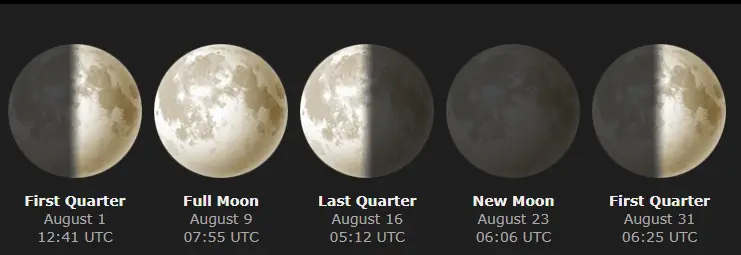
(Moon phase image credit: MoonGiant.com)
🌕 Major Lunar Events
| Date | Event | Time (GMT) | Details |
|---|---|---|---|
| Aug 9 | Sturgeon Full Moon | 07:55 | • Moon in Capricorn • Named after abundant sturgeon fish catches • Technically full for just a moment, but appears full ±1 day |
| Aug 23 | New Moon | 06:06 | • Perfect for stargazing • Moon between Earth and Sun • No moonlight interference |
🌠 Meteor Showers
Perseid Meteor Shower Peak
- Dates: Aug 11-12
- Peak Rate: 100 meteors/hour
- Moon Phase: 91% illuminated (bright interference)
- Visibility: Northern Hemisphere
- Best Viewing: Predawn hours
- Pro Tip: Observe from shadowed areas to reduce moonlight effects
(Active period: July 17 - August 24 | Radiant: Perseus constellation)
🔭 Planetary Alignments & Conjunctions
August 11: Six-Planet Alignment
Visible Planets: Mercury, Jupiter, Venus, Saturn
Telescope Needed: Uranus, Neptune
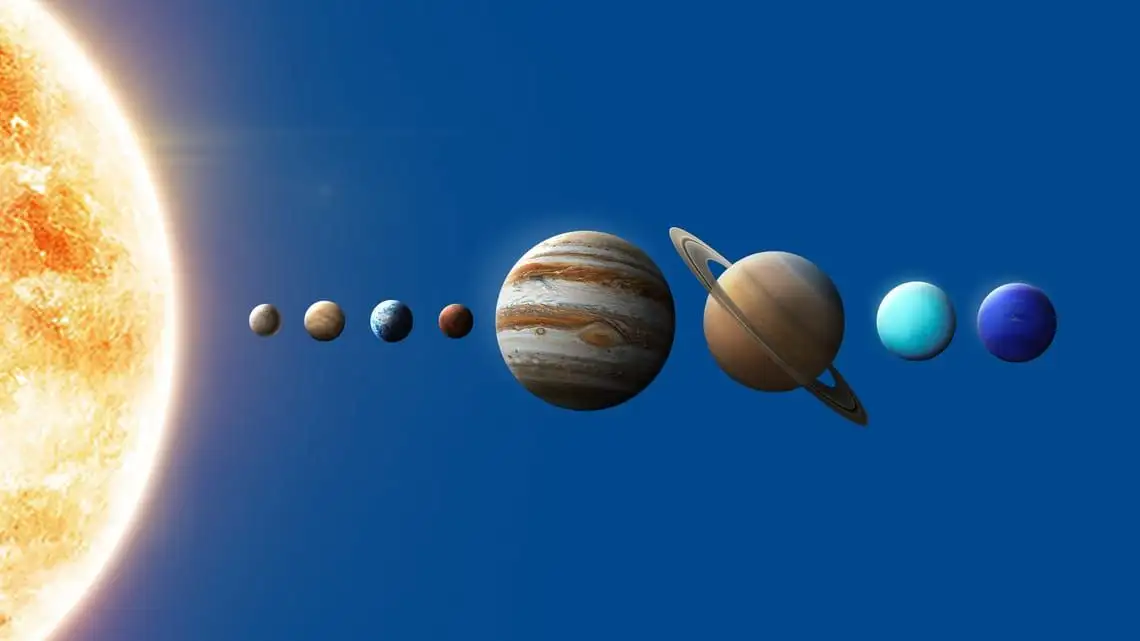
(Image Credit: StarWalk.space )
| Planet | Magnitude | Constellation | Visibility |
|---|---|---|---|
| Mercury | -0.5 | Gemini | Naked eye |
| Jupiter | -1.9 | Gemini | Naked eye |
| Venus | -4.0 | Gemini | Naked eye |
| Saturn | 0.7 | Pisces | Naked eye |
Notable Conjunctions
| Date | Event | Time (GMT) | Separation | Details |
|---|---|---|---|---|
| Aug 12 | Venus-Jupiter Conjunction | 07:00 | 0°54' | Brightest planetary pair in morning sky |
| Aug 12 | Moon-Saturn Conjunction | 15:05 | 4°00' | 88% moon in Pisces |
| Aug 12 | Moon-Neptune Conjunction | 13:36 | 2°34' | Telescope required |
| Aug 16 | Moon-Pleiades Conjunction | 16:09 | 0°54' | Beautiful in binoculars |
| Aug 19 | Moon-Jupiter Conjunction | 21:05 | 4°48' | 13% moon |
| Aug 20 | Moon-Venus Conjunction | 12:27 | 4°45' | 9% moon |
| Aug 21 | Moon-Mercury Conjunction | 16:14 | 3°42' | Excellent for planet spotting |
| Aug 26 | Moon-Mars Conjunction | 16:41 | 2°48' | Red planet visible |
☄️ Special Event: Mercury at Greatest Western Elongation
Date: August 19
Details:
- Maximum angular distance: 18°36' west of Sun
- Visibility: Best morning apparition of 2025
- Magnitude: -0.2
- Location: Cancer constellation
Observation Tips
- For Perseids: Use buildings/trees to block moonlight
- For Planets: Use astronomy apps to locate conjunctions
- Best Timing: 1 hour before sunrise for morning events
- Equipment: Binoculars (7x50 or 10x50) ideal for most events
All times in GMT. Convert to your local time zone for exact viewing times.
Would you like me to create a printable version of this calendar? 🌌🔭
(* Data sourced from StarWalk.space)
Wendy
|
2025.07.15


