
How Do the Sun and Moon Shape Life on Earth? (2025 Guide)
The Sun and Moon are two of the most influential celestial bodies in Earth’s systems, shaping everything from timekeeping and ocean tides to cultural traditions and astronomical events. Their predictable yet complex interactions form the foundation of natural cycles that govern life on our planet. The **Sun and Moon cycle** influences daily rhythms—such as sunrise and sunset—and longer-term phenomena like lunar phases and seasonal changes. Additionally, rare but striking events such as the **eclipse of Sun and Moon** captivate scientists and the public alike, offering insights into orbital mechanics and celestial alignment. Understanding these patterns is not only essential for scientific literacy but also enriches cultural awareness and practical decision-making in agriculture, navigation, and religious observance.
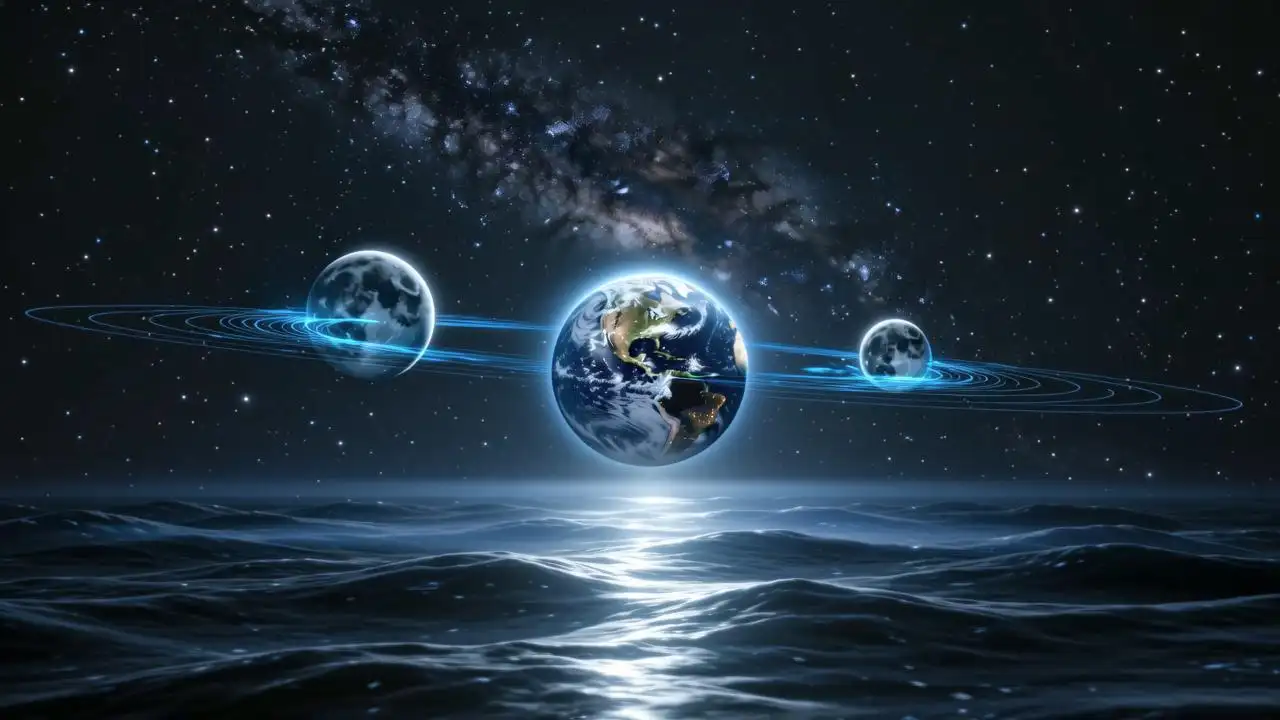
This guide aims to provide a clear, accurate, and logically structured explanation of key astronomical concepts related to the Sun and Moon. By exploring their orbital dynamics, gravitational effects, and roles in timekeeping systems, readers will gain a fact-based understanding of how these celestial bodies shape both natural processes and human societies.
The Sun and Moon Cycle: Orbital Mechanics and Phases
The motion of Earth and the Moon around the Sun creates the fundamental units of time we use every day. Earth rotates on its axis approximately once every 24 hours, defining the **solar day**—the period from one noon to the next, based on the Sun's position in the sky. Over the course of a year, Earth completes one full revolution around the Sun, taking about 365.25 days, which forms the basis of the solar calendar.
Meanwhile, the Moon orbits Earth roughly every 27.3 days—a period known as the sidereal month. However, because Earth is also moving along its orbit around the Sun, it takes the Moon about 29.5 days to return to the same phase (e.g., from new moon to new moon). This longer period is called the synodic month and is central to the **Sun and Moon cycle** observed from Earth. During this cycle, the changing relative positions of the Sun, Earth, and Moon produce the familiar **lunar phases**: new moon, waxing crescent, first quarter, waxing gibbous, full moon, waning gibbous, last quarter, and waning crescent.
These phases occur due to sunlight reflecting off different portions of the Moon’s surface as seen from Earth. For example, during a full moon, the Moon is on the opposite side of Earth from the Sun, so its entire illuminated face is visible. In contrast, during a new moon, the Moon lies between Earth and the Sun, making its dark side face us. These cyclical changes have been tracked for millennia and remain vital for astronomy, navigation, and cultural practices.
Solar vs Lunar Calendar: Timekeeping Based on Celestial Bodies
Human civilizations have developed various calendar systems to organize time based on celestial observations. The two primary types are the **solar calendar** and the **lunar calendar**, each with distinct structures and applications.
The most widely used **solar calendar** today is the Gregorian calendar, introduced in 1582 by Pope Gregory XIII. It is based on Earth’s orbit around the Sun, with a year lasting approximately 365.25 days. To account for the extra 0.25 days, a leap day is added every four years (with exceptions for century years not divisible by 400). This system ensures long-term accuracy in tracking seasons, making it ideal for agricultural planning and civil administration.
In contrast, the **lunar calendar**, such as the Islamic Hijri calendar, is based entirely on the Moon’s phases. A lunar year consists of 12 synodic months, totaling about 354 days—roughly 11 days shorter than the solar year. As a result, lunar calendars drift relative to the seasons over time. For instance, the Islamic holy month of Ramadan shifts earlier each year in the Gregorian calendar, eventually cycling through all seasons over a 33-year period.
To reconcile the differences between solar and lunar cycles, some cultures use **lunisolar calendars**, including the Hebrew and traditional Chinese calendars. These systems incorporate intercalary (leap) months approximately every two or three years to keep lunar months aligned with the solar year. For example, the Hebrew calendar adds an extra month seven times in a 19-year Metonic cycle, ensuring that religious festivals occur in their proper seasons.
Understanding the **solar vs lunar calendar** distinction helps explain why dates for holidays like Easter (based on a lunisolar calculation) or Eid al-Fitr (determined by moon sightings) vary annually in the Gregorian calendar.
Sun Moon Gravitational Pull: Tides and Orbital Influences
The **Sun Moon gravitational pull** plays a crucial role in generating Earth’s ocean tides, despite vast differences in mass and distance. According to Newton’s law of universal gravitation, the force of gravity between two objects depends on their masses and the inverse square of the distance between them. While the Sun is vastly more massive than the Moon—about 27 million times more—it is also nearly 400 times farther away. As a result, the Moon exerts a stronger tidal influence on Earth due to its proximity.
Tides arise from differential gravitational forces: the side of Earth facing the Moon experiences a stronger pull, causing water to bulge outward (high tide), while a second bulge occurs on the opposite side due to inertia. This results in two high tides and two low tides each day in most coastal regions.
When the Sun, Earth, and Moon align—during new and full moons—their combined gravitational forces produce enhanced tides known as **spring tides** (not related to the season). Conversely, when the Sun and Moon are at right angles relative to Earth (during first and third quarters), their pulls partially cancel out, leading to weaker **neap tides**.
Beyond short-term tidal variations, the **Sun Moon gravitational pull** has long-term consequences. Tidal friction gradually slows Earth’s rotation by about 2.3 milliseconds per century, lengthening the day over millions of years. Simultaneously, angular momentum transfer causes the Moon to recede from Earth at a rate of approximately 3.8 centimeters per year, as measured by lunar laser ranging experiments using retroreflectors left by Apollo missions (NASA, 2023).
Another effect is tidal locking: the Moon already keeps the same face toward Earth due to this process, and over billions of years, Earth may eventually become tidally locked to the Moon as well, though this would take far longer than the current age of the solar system.
Eclipse of Sun and Moon: Causes, Types, and Observations
One of the most dramatic manifestations of the **Sun and Moon cycle** is the occurrence of eclipses. An **eclipse of Sun and Moon** happens when the three bodies align precisely in space, casting shadows across one another.
A **solar eclipse** occurs when the Moon passes directly between Earth and the Sun, blocking sunlight either partially or completely. There are three main types:
- **Total solar eclipse**: The Moon fully covers the Sun, revealing the solar corona. This can only be seen from a narrow path on Earth.
- **Partial solar eclipse**: Only part of the Sun is obscured, visible over a broader region.
- **Annular solar eclipse**: When the Moon is near apogee (farthest from Earth), it appears smaller and does not fully cover the Sun, leaving a “ring of fire” visible.
A **lunar eclipse** happens when Earth moves between the Sun and the Moon, casting its shadow on the Moon’s surface. These can be:
- **Total lunar eclipse**: The Moon enters Earth’s umbra (darkest shadow), often turning reddish due to Rayleigh scattering of sunlight through Earth’s atmosphere.
- **Partial lunar eclipse**: Only part of the Moon enters the umbra.
- **Penumbral lunar eclipse**: The Moon passes through the lighter penumbral shadow, resulting in a subtle dimming.
Eclipses do not occur every month because the Moon’s orbit is tilted about 5 degrees relative to Earth’s orbital plane (the ecliptic). Eclipses only happen when the Moon crosses the ecliptic at points called nodes, and this alignment recurs in cycles such as the Saros cycle (approximately 18 years).
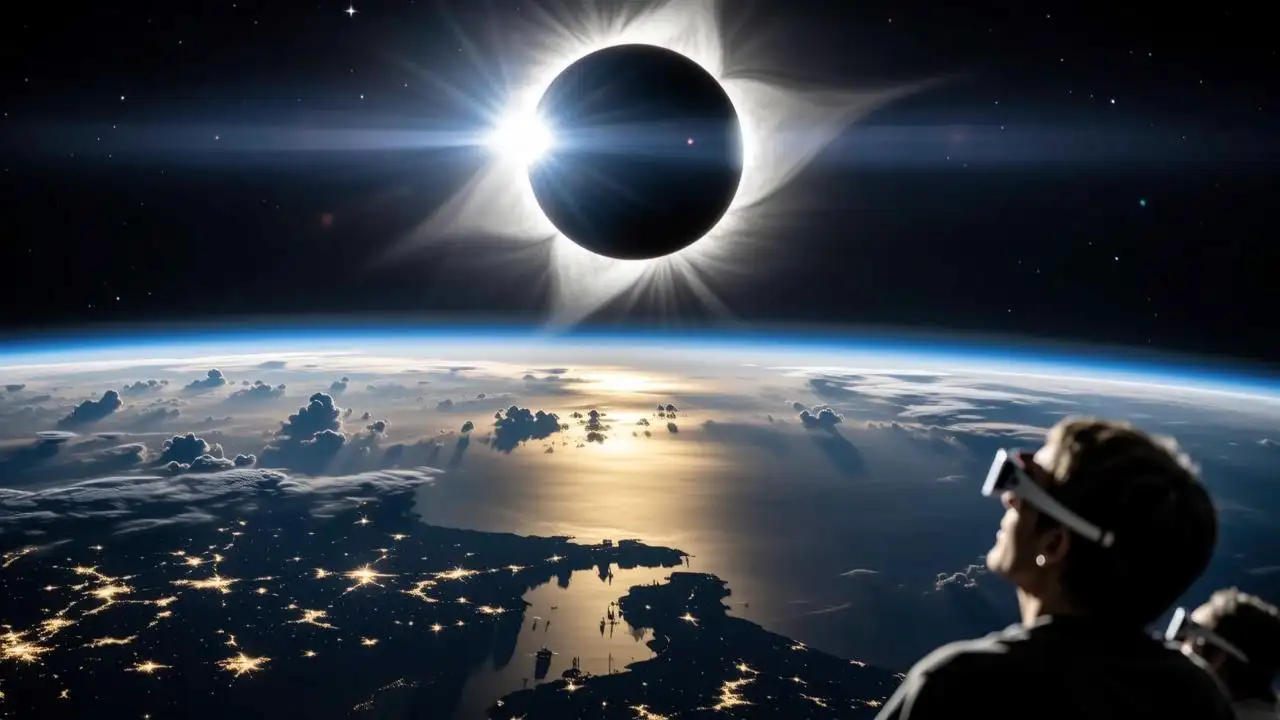
Solar eclipses are safe to observe only with proper eye protection, such as ISO-certified solar viewing glasses. Looking directly at the Sun without protection can cause permanent eye damage. In contrast, lunar eclipses are completely safe to view with the naked eye and can last several hours.
According to NASA, there are typically between four and seven eclipses each year, combining both solar and lunar events. For example, in 2024, North America experienced a total solar eclipse on April 8, visible along a path stretching from Texas to Maine.
Conclusion: Integrating Knowledge of the Sun and Moon for Scientific Literacy
Understanding the **Sun and Moon cycle**, the differences between **solar vs lunar calendar** systems, the mechanics of **Sun Moon gravitational pull**, and the conditions behind the **eclipse of Sun and Moon** provides a solid foundation for scientific literacy. These concepts connect physics, astronomy, and cultural history, illustrating how humanity has interpreted and adapted to celestial rhythms over time.
From defining the length of a day to predicting tides and scheduling religious festivals, knowledge of these cycles remains practically relevant. Moreover, observing events like eclipses fosters public engagement with science and encourages deeper exploration of the universe.
[Disclaimer] The content related to moon and others in this article is for reference only and does not constitute professional advice in any relevant field. Readers should make decisions based on their own circumstances with caution and consult professionals with the appropriate qualifications when necessary. The author and publisher of this article shall not be held responsible for any consequences resulting from actions taken based on the content of this article.
James Peterson
|
2025.11.25


