
Is It a Full Moon Tonight? Find Out Fast for 2025
Introduction: Understanding the Full Moon and Its Significance
A full moon occurs when the Moon is positioned directly opposite the Sun in relation to Earth, resulting in the entire illuminated side of the Moon being visible from our planet. Astronomically, this phase happens approximately once every 29.5 days—the length of a lunar cycle or synodic month. During a full moon, the Moon rises around sunset and sets around sunrise, making it visible throughout the night. This precise alignment is not only a fascinating celestial event but also marks a key point in tracking time and natural rhythms.
Throughout history, the full moon has held deep cultural, spiritual, and scientific significance across civilizations. Ancient agricultural societies used lunar phases to determine planting and harvesting schedules, while many religious calendars—including Buddhist, Hindu, and Islamic traditions—base important festivals on the lunar cycle. For example, Easter is observed on the first Sunday after the first full moon following the spring equinox. In modern times, scientists study lunar effects on tides, animal behavior, and even human sleep patterns, although conclusive evidence linking the moon to behavioral changes remains limited.
Given its broad relevance, people frequently seek real-time information about when the next full moon will occur. Whether for planning stargazing events, scheduling rituals, or simply satisfying curiosity, knowing when is full moon is essential. With digital tools now widely accessible, determining lunar phases with high accuracy is easier than ever before.
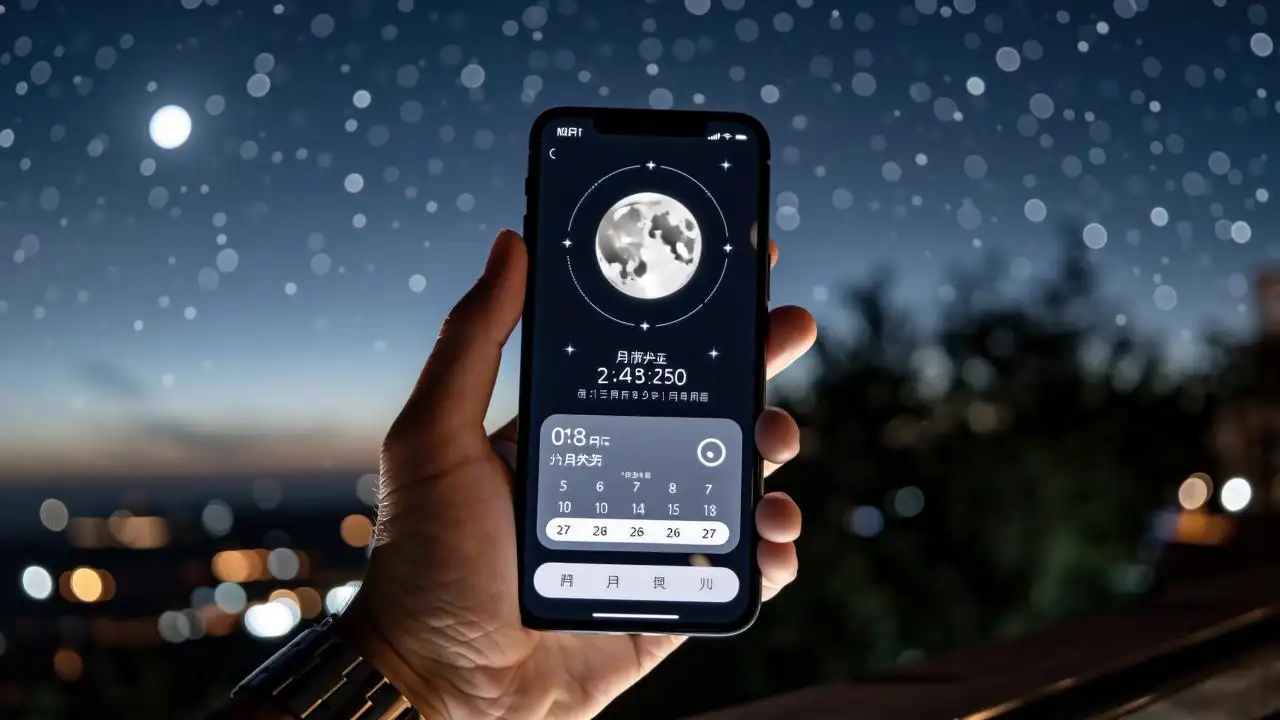
Current Phase of the Moon: How to Identify What Phase We're In
The Moon progresses through eight primary phases during each lunar cycle: New Moon, Waxing Crescent, First Quarter, Waxing Gibbous, Full Moon, Waning Gibbous, Last Quarter, and Waning Crescent. These stages reflect how much of the Moon’s sunlit surface is visible from Earth at any given time. The transition between these phases is gradual and governed by the Moon’s orbit around Earth, which takes roughly 27.3 days (sidereal month), though the full cycle of phases lasts 29.5 days due to Earth’s movement around the Sun.
Scientists determine the current phase of the moon using precise astronomical calculations based on the Moon’s ecliptic longitude relative to the Sun. When the difference reaches 180 degrees, it is officially a full moon. Observatories and space agencies like NASA use ephemeris data—tables that provide the positions of celestial objects over time—to compute exact timings down to the second.
For public access, several reliable websites and apps display the current phase of the moon in real time. Platforms such as timeanddate.com, the U.S. Naval Observatory, and NASA’s Solar System Exploration site offer interactive moon phase calendars updated daily. These tools often include visual representations showing the Moon’s current appearance, percentage of illumination, and countdowns to the next major phase. Some even allow users to input their location for localized data, ensuring greater accuracy in observation timing.
Knowing whether it's a full moon today can be quickly verified using these resources. A common question among users is: "full moon today yes or no?" Digital platforms answer this directly, typically displaying a clear label indicating the current phase alongside the date and time of the most recent and upcoming full moons.
Check Full Moon Date Online: Reliable Sources for Accurate Data
To check full moon date online, follow a simple step-by-step process using trusted astronomy-based platforms. Begin by visiting authoritative sites such as timeanddate.com, NASA.gov, or The Old Farmer’s Almanac. Each offers dedicated sections for lunar information:
- timeanddate.com: Provides an interactive Moon Phase Calendar where users can select any month and year to view all full moons, along with exact timestamps and visibility maps.
- NASA: Offers science-backed data through its “Sky Events” calendar, including detailed explanations of lunar phenomena such as supermoons and micromoons.
- The Old Farmer’s Almanac: Publishes annual full moon dates with traditional names (e.g., "Harvest Moon," "Wolf Moon") and gardening tips tied to lunar cycles.
Once on the site, navigate to the moon calendar section and locate the upcoming full moon entries. For instance, in 2024, notable full moons include the Pink Moon on April 23, the Flower Moon on May 23, and the Blue Moon (second full moon in a calendar month) on August 19. Each entry lists the exact Universal Time (UTC) of the full moon.
Interpreting full moon timestamps requires attention to time zones. Since the full moon occurs at a specific moment globally, local clocks may show different dates depending on geographic location. For example, if a full moon peaks at 03:12 UTC on June 22, it would appear on June 21 at 10:12 PM in New York (EDT) but on June 22 at 12:12 PM in Tokyo (JST). Always convert UTC to your local time zone for accurate interpretation.
These tools make it easy to check full moon date online and plan accordingly, whether for photography, meditation, or academic purposes.

Track the Moon Cycle with a Moon Cycle Tracker App
Modern technology allows individuals to stay informed about lunar phases through specialized mobile applications known as moon cycle tracker apps. Available on both iOS and Android platforms, these apps combine scientific data with user-friendly interfaces to deliver real-time updates.
Popular options include:
- Moon Phase Calendar – Daily Lunar Tracker (Android): Features a clean dashboard showing the current phase of the moon, rise/set times, zodiac position, and tidal activity.
- Lunar Calendar – Moon Phases (iOS): Includes customizable notifications for full moons, new moons, and eclipses, ideal for ritual planners or astrologers.
- Time and Date Sky Tonight: Offers augmented reality sky viewing, allowing users to point their phone at the night sky and identify the Moon’s phase instantly.
Key benefits of using a moon cycle tracker app include automated alerts, personalized reminders, and integration with calendar systems. Many apps also provide additional features such as astrology insights, fertility tracking (based on lunar theories), and weather overlays for optimal viewing conditions.
When comparing apps, consider three main factors: accuracy (data sourced from official observatories), interface clarity, and extra functionalities. While most top-tier apps pull data from the same astronomical models, differences arise in usability and presentation. For those seeking precision without complexity, government-backed platforms remain the gold standard—but for everyday convenience, a well-rated moon cycle tracker app delivers unmatched accessibility.
Is It Full Moon Today? Quick Verification Methods
If you're wondering "full moon today yes or no?", there are several fast and effective ways to confirm.
First, perform a direct web search using phrases like “is it full moon today?” or “today’s moon phase.” Major search engines like Google often display an instant answer box at the top of results, showing the current phase, illumination percentage, and next full moon date. Similarly, voice assistants such as Siri, Alexa, or Google Assistant can respond verbally within seconds when asked, “What phase is the Moon in right now?”
Another method involves visual observation. On a clear night, go outside and look at the Moon. If it appears perfectly round and bright—illuminating the landscape—it is likely near or at peak fullness. However, keep in mind that the human eye cannot distinguish the exact moment of full illumination; the Moon may look “full” for two to three nights around the actual event. True astronomical fullness lasts only an instant, defined by angular alignment rather than appearance.
For definitive confirmation, always cross-reference with a trusted source. Combining visual cues with digital verification ensures both practical awareness and scientific accuracy when you check full moon date online.
Conclusion: Staying Informed About Lunar Cycles Made Easy
Tracking the full moon and other lunar phases no longer requires complex instruments or advanced knowledge. Thanks to digital advancements, anyone can easily monitor the current phase of the moon and know exactly when is full moon using free, reliable tools. From comprehensive websites like NASA and timeanddate.com to intuitive moon cycle tracker app solutions, staying informed has never been simpler.
By leveraging online calendars, mobile apps, and voice-enabled devices, users gain immediate access to accurate, up-to-date lunar data tailored to their time zone. These resources empower individuals to engage meaningfully with natural cycles—whether for educational, recreational, or personal growth purposes.
Understanding lunar rhythms connects us to broader environmental patterns and encourages mindfulness of Earth’s place in the cosmos. As interest in astronomy, sustainability, and holistic living grows, so does the value of integrating lunar awareness into daily life. Embrace the tools available today to explore the sky with confidence and curiosity.
James Carter
|
2025.11.25


