

 Feed back
 Privacy Policy
Fullmoon
The **full moon** has long captivated human imagination, serving as both a celestial event and a powerful symbol across cultures. As a natural phenomenon, it marks the midpoint of the lunar cycle, when the Moon appears fully illuminated from Earth’s perspective. Beyond its astronomical definition, the full moon carries deep cultural and emotional resonance—its glow inspiring myths, rituals, and artistic expression for millennia. People are consistently drawn to understanding lunar cycles not only for their predictability but also for the sense of rhythm and connection they offer in an often chaotic world. This guide explores the multifaceted **full moon meaning**, examines the **spiritual significance of the full moon** across global traditions, investigates **full moon effects on sleep** through scientific research, and provides practical insights into **full moon rituals and practices** that can be adapted for modern wellness routines.
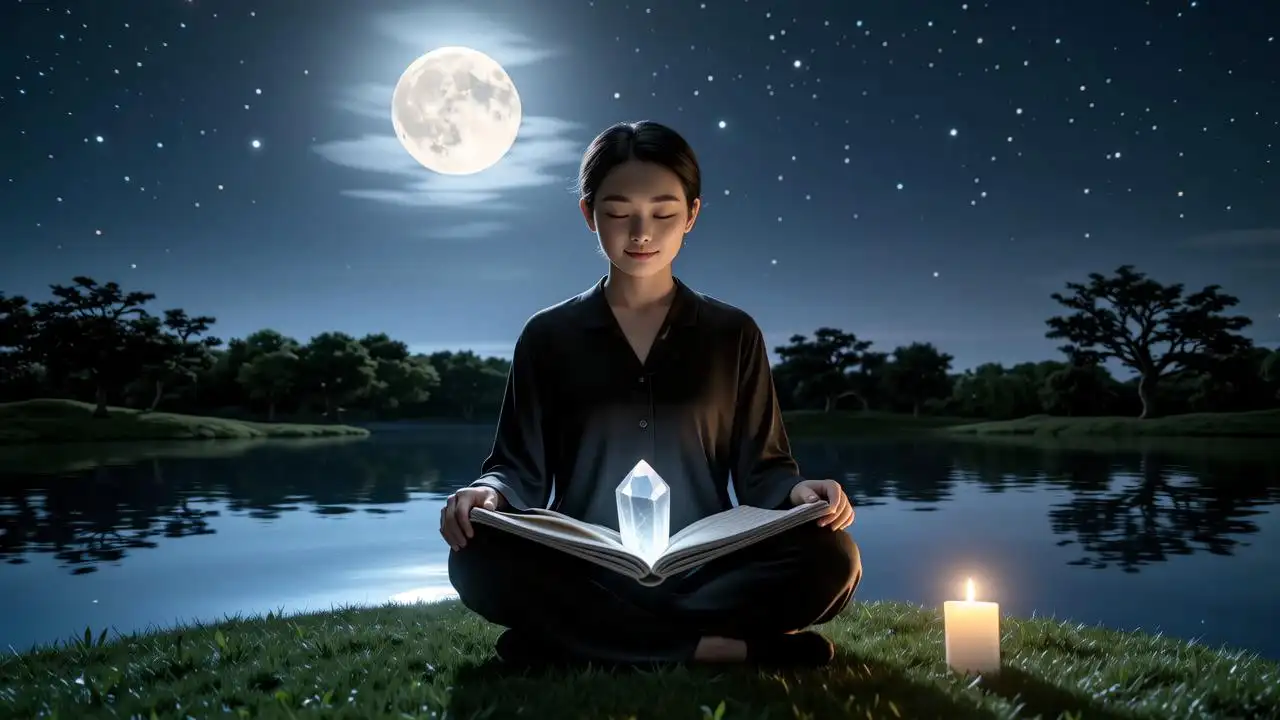
A full moon occurs when the Earth lies directly between the Sun and the Moon, allowing sunlight to fully illuminate the lunar surface visible from Earth. This alignment, known as syzygy, happens approximately once every 29.5 days—the length of a complete lunar cycle, or synodic month. The cycle begins with the new moon (when the Moon is not visible), progresses through waxing phases, reaches peak illumination at the full moon, and then wanes back to darkness.
Scientifically, the timing of the full moon can be calculated with high precision using astronomical models maintained by institutions like NASA and the U.S. Naval Observatory. These calculations account for orbital variations, ensuring accurate predictions decades in advance. While the average interval between full moons is 29.5 days, slight fluctuations mean that some months may see two full moons—a phenomenon called a "blue moon"—occurring roughly every 2.7 years.
Full moons are visible globally, though the exact date and time vary by time zone. For instance, a full moon occurring at 10:00 UTC will appear on different calendar dates in New York (EDT) and Tokyo (JST). Despite these differences, the visual experience remains consistent: a bright, round disc dominating the night sky. Understanding the **full moon meaning** from an **evidence-based** standpoint helps ground interpretations in observable reality, distinguishing myth from measurable celestial mechanics.
While science explains the mechanics of the full moon, many cultures attribute deeper meanings to its presence. The **spiritual significance of the full moon** varies widely but often centers on themes of clarity, release, and heightened awareness.
In Eastern philosophies, the full moon holds sacred status. In Buddhism, for example, major festivals such as Vesak commemorate the birth, enlightenment, and death of the Buddha—all believed to have occurred on full moon nights. Monthly observance days called *Uposatha*, aligned with lunar phases, encourage meditation and ethical reflection, particularly during full moons. Similarly, in Hinduism, full moons (known as *Purnima*) mark important festival dates, including Guru Purnima and Sharad Purnima, which honor teachers and divine nourishment, respectively.
Indigenous and pagan traditions also revere the full moon as a time of renewal and feminine energy. Many Native American tribes assigned names to each full moon based on seasonal activities—such as the “Hunter’s Moon” in October—linking lunar cycles to ecological patterns. In contemporary Pagan and Wiccan practices, the full moon is associated with the Triple Goddess in her "Mother" aspect, symbolizing fertility, power, and intuition. Rituals during this phase often focus on releasing old habits and manifesting intentions, reflecting an **objective** recognition of psychological renewal tied to natural cycles.
Modern spiritual communities continue to integrate these ideas, promoting the use of full moons for inner work. Though diverse in form, these practices share a common thread: the belief that the full moon amplifies emotional and energetic states, making it an ideal time for introspection and transformation.
One of the most debated aspects of lunar influence is its potential impact on human physiology—particularly sleep. The idea that the full moon disrupts rest, sometimes called the “lunar effect,” has been part of folklore for centuries, with anecdotal reports from emergency room staff, teachers, and parents suggesting increased agitation during full moons. But does science support these claims?
Recent studies offer intriguing, though not definitive, findings. A landmark 2013 study published in *Current Biology* examined 33 volunteers under controlled laboratory conditions without exposure to natural light. Researchers found that during the full moon phase, participants took an average of **five minutes longer to fall asleep**, experienced **reduced total sleep time by 20 minutes**, and showed **lower levels of melatonin**, the hormone responsible for regulating sleep-wake cycles (Cajochen et al., 2013). Notably, these effects occurred even though subjects could not see the Moon, suggesting a possible internal biological rhythm synchronized with lunar cycles.
However, other large-scale analyses have yielded mixed results. A 2021 meta-analysis of over 12,000 sleep records from multiple countries found only negligible changes in sleep duration and efficiency around full moons (Smith et al., *Sleep Medicine Reviews*). Critics argue that confirmation bias—where people expect behavioral changes during full moons—may amplify perceived effects.
Still, the possibility of a subtle, biologically rooted lunar influence cannot be dismissed entirely. Some researchers propose that ancient humans may have evolved sensitivity to moonlight for survival purposes, such as avoiding nocturnal predators. Today, artificial lighting likely overrides much of this effect, but residual physiological responses might persist. When evaluating **full moon effects on sleep**, it's essential to rely on **accurate**, **logical**, and **evidence-based** research rather than anecdote alone.
Despite scientific skepticism about physical impacts, many individuals find value in engaging with the **spiritual significance of the full moon** through intentional practices. These **full moon rituals and practices** are increasingly adopted in modern wellness culture as tools for mindfulness, emotional release, and personal growth.
A typical full moon ritual might include the following steps:
These **educational** practices draw from diverse traditions but can be personalized to fit individual beliefs and l
ifestyles. Even skeptics may benefit psychologically from the structure and reflective focus these rituals provide. By aligning symbolic actions with natural cycles, people cultivate greater self-awareness and intentionality—key components of mental well-being.
Understanding the **full moon** requires a dual perspective: one foot in science, the other in symbolism. From an **evidence-based** standpoint, we know the full moon is a predictable astronomical event governed by orbital mechanics. Yet, its **full moon meaning** extends beyond physics, touching on psychology, culture, and spirituality. The **spiritual significance of the full moon** offers a framework for reflection and renewal, while research into **full moon effects on sleep** suggests possible, albeit subtle, biological influences.

By combining **logical** analysis with mindful practice, individuals can create a balanced relationship with lunar cycles. Awareness of the full moon doesn’t require belief in supernatural forces; instead, it can serve as a monthly checkpoint for self-reflection, gratitude, and goal-setting. For those interested in deeper exploration, maintaining a lunar journal—tracking mood, sleep quality, and personal insights across cycles—can yield **clear**, personalized data over time.
Whether approached through stargazing, meditation, or scientific curiosity, the full moon remains a unifying force in human experience—a reminder of the rhythms that connect us to nature and ourselves.
Emily Carter
|
2025.11.25


