

 Feed back
 Privacy Policy
Fullmoon
The symbolic resonance of “to the moon” extends well beyond metaphor. Scientifically, the moon plays a critical role in stabilizing Earth’s axial tilt, influencing tides, and offering a natural laboratory for studying planetary formation. Its proximity—approximately 384,400 kilometers (238,855 miles) on average—makes it an ideal first step for deep space exploration. Humanity's interest in lunar exploration dates back to the early Cold War era, culminating in NASA’s historic Apollo missions. These efforts demonstrated not only technical prowess but also the unifying potential of space exploration. Today, renewed global interest, driven by both national space programs and private enterprises, reflects a shared vision: establishing a sustained human presence beyond Earth. This guide aims to demystify the process of reaching the moon, analyze ongoing missions, and assess the long-term prospects of living on another world.
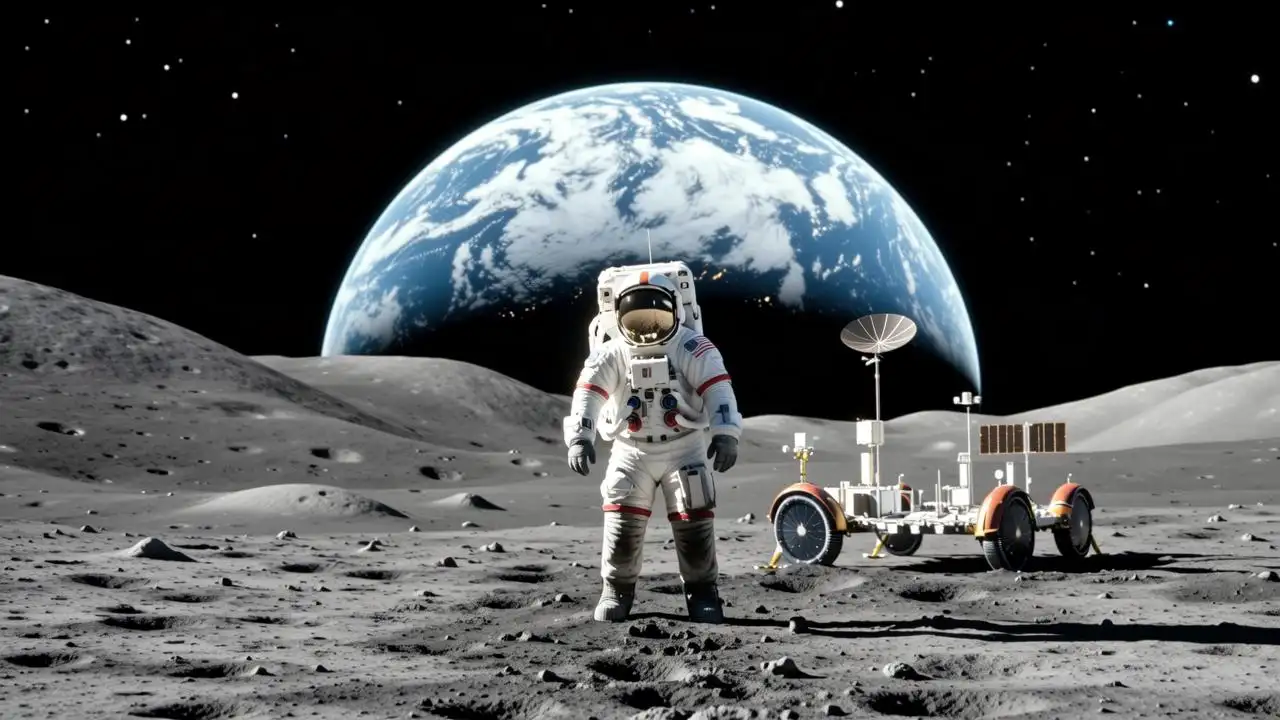
Achieving **space travel to the Moon** requires overcoming immense physical and engineering challenges. At the core of this endeavor are advanced propulsion systems. Chemical rockets, such as those using liquid hydrogen and oxygen, remain the primary method for launching spacecraft from Earth due to their high thrust. For example, the Saturn V rocket used in the Apollo program generated 7.6 million pounds of thrust at liftoff. More recently, ion thrusters—though producing lower thrust—are being explored for uncrewed missions because of their superior fuel efficiency over long durations. NASA’s Dawn mission successfully used ion propulsion to visit asteroids, demonstrating its viability for future lunar cargo transport.
Orbital mechanics is equally crucial. Most lunar missions follow a Hohmann transfer orbit—a fuel-efficient elliptical path that moves a spacecraft from Earth orbit to lunar orbit. Another key trajectory is the free-return path, which allows a spacecraft to loop around the moon and return to Earth without additional propulsion if systems fail—an important safety feature used during Apollo 13. Crewed spacecraft must balance life support, radiation protection, and re-entry capabilities, while uncrewed vehicles prioritize payload capacity and autonomous navigation. Landing on the moon presents further complications: unlike Earth, the moon lacks an atmosphere, so parachutes are ineffective. Instead, spacecraft rely entirely on retrorockets to decelerate during descent, requiring precise control systems to ensure a safe **lunar landing**.
Re-entry into Earth’s atmosphere after returning from the moon subjects capsules to temperatures exceeding 2,760°C (5,000°F). Heat shields made of ablative materials, such as Avcoat used on the Orion spacecraft, dissipate this heat through controlled erosion. These combined technologies form the backbone of modern lunar access strategies.
NASA’s legacy in lunar exploration began with the Apollo program (1969–1972), which achieved six successful crewed landings on the moon. Apollo 11, launched on July 16, 1969, marked humanity’s first footsteps on another world when Neil Armstrong and Buzz Aldrin descended to the surface in the Lunar Module *Eagle*. Over the course of the program, astronauts collected 382 kilograms (842 pounds) of lunar rocks and soil, conducted scientific experiments, and deployed instruments still studied today. The final mission, Apollo 17 in December 1972, included geologist Harrison Schmitt—the only scientist-astronaut to walk on the moon.
After a decades-long hiatus, NASA is revitalizing its **NASA mission to the Moon** through the Artemis program. Named after Apollo’s twin sister in Greek mythology, Artemis aims to return humans to the lunar surface by 2026, including the first woman and person of color. Artemis I (launched November 2022) was an uncrewed test flight of the Space Launch System (SLS) and Orion spacecraft, completing a 25.5-day journey around the moon. Artemis II, scheduled for 2025, will carry four astronauts on a similar trajectory without landing. Artemis III will execute the actual **lunar landing**, utilizing a Human Landing System (HLS) developed by SpaceX based on its Starship design.
Central to these missions is the SLS, the most powerful rocket ever built, capable of producing 8.8 million pounds of thrust. Paired with the Orion spacecraft—which features advanced life support, solar power, and radiation shielding—this system represents a major leap in deep space capability. Additionally, NASA is building the Gateway Lunar Orbital Station, a small space station intended to orbit the moon and serve as a staging point for surface missions. International partners, including ESA (European Space Agency), JAXA (Japan Aerospace Exploration Agency), and CSA (Canadian Space Agency), contribute modules and robotics, reflecting a new era of cooperative exploration.
Understanding **how to reach the Moon** involves breaking down the journey into distinct phases governed by orbital dynamics and engineering precision. First is the launch phase: the spacecraft lifts off from Earth using powerful boosters to escape gravity and enter low Earth orbit (LEO). Once in LEO, typically at an altitude of 160–2,000 km, mission controllers verify all systems before initiating trans-lunar injection (TLI)—a critical engine burn that propels the craft toward the moon.
During the three-day coast to the moon, mid-course corrections may be performed to fine-tune the **spacecraft trajectory**. These adjustments compensate for minor deviations caused by gravitational influences or propulsion variances. As the spacecraft approaches the moon, it performs a lunar orbit insertion (LOI) burn to slow down and be captured by lunar gravity. Failure to execute LOI correctly could result in missing the moon or crashing into its surface.
For crewed missions, the next step involves separating the lander from the command module. The lander descends using powered propulsion, navigating rugged terrain with sensors and cameras. Touchdown occurs at pre-selected sites, often near the lunar south pole due to suspected water ice deposits. After surface operations conclude, the ascent stage lifts off and docks with the waiting command module in orbit. Finally, the crew returns to Earth, enduring high-speed re-entry before splashing down in the ocean.
Looking ahead, future advancements promise greater efficiency. Reusable landers, such as SpaceX’s Starship HLS, aim to reduce costs and enable frequent trips. Commercial launch providers are increasingly integral to NASA’s strategy, fostering innovation and competition in the race **to the moon**.
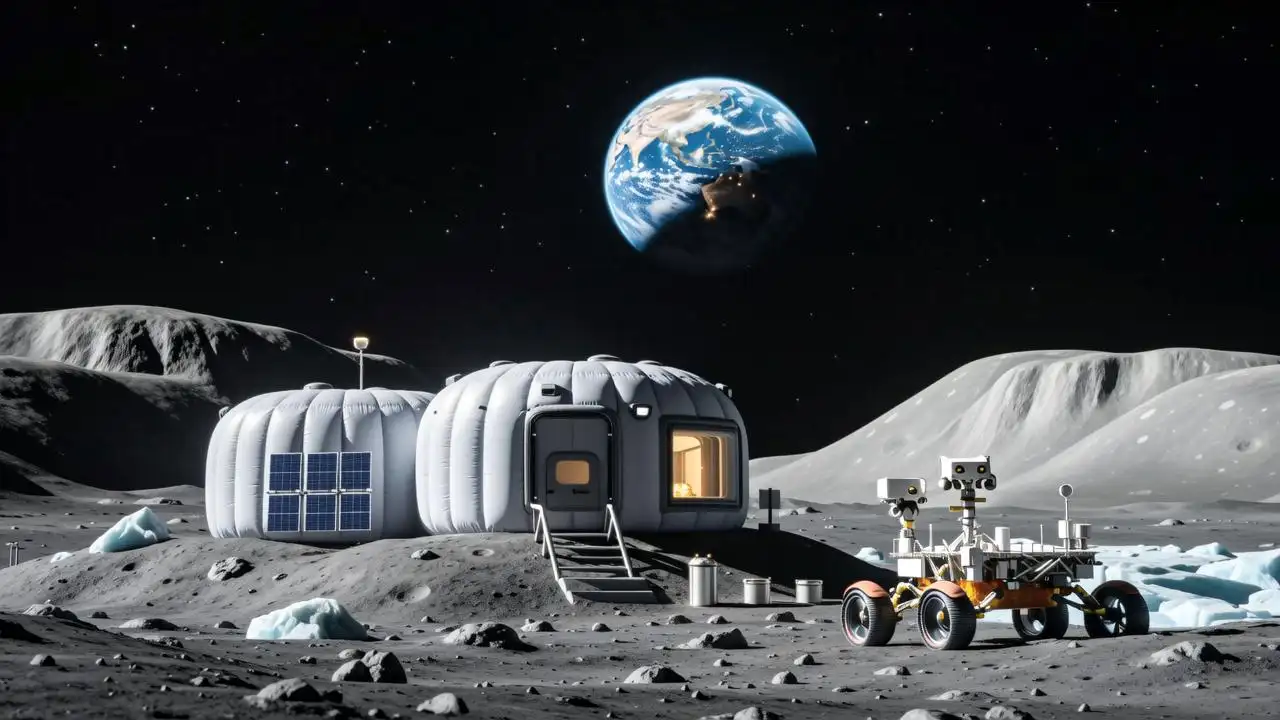
The concept of **Moon colonization future** is no longer confined to science fiction. Governments and private companies alike are developing plans for permanent lunar bases. Scientific motivations include conducting astronomy from the far side (shielded from Earth’s radio noise), studying regolith composition, and testing long-duration life support systems. Economically, the moon holds potential resources such as helium-3 (a candidate for nuclear fusion) and rare earth elements.
Establishing a viable **lunar base** demands solutions to extreme conditions. Temperatures range from 127°C (260°F) during the day to -173°C (-280°F) at night. Radiation exposure from cosmic rays and solar flares poses serious health risks, necessitating robust shielding—possibly using regolith-based construction or underground habitats. A key enabling technology is **in-situ resource utilization (ISRU)**, which involves extracting water, oxygen, and building materials directly from the lunar environment. For instance, NASA’s VIPER rover (planned for 2025) will drill into polar regions to map subsurface ice, a vital resource for drinking water, breathable air, and rocket fuel production via electrolysis.
Potential locations for initial settlements include the lunar south pole, particularly Shackleton Crater, which contains permanently shadowed regions believed to harbor significant ice deposits. These areas also receive near-constant sunlight on elevated rims, ideal for solar power generation. Long-term visions include sustainable habitats with closed-loop ecosystems, lunar agriculture using hydroponics, and manufacturing facilities leveraging low gravity. Moreover, the moon serves as a strategic proving ground for Mars missions, allowing engineers to test equipment and protocols in a harsh but accessible environment.
While full-scale colonization remains decades away, incremental progress is underway. NASA targets the establishment of a sustained presence by the late 2030s, supported by international frameworks like the Artemis Accords—bilateral agreements promoting peaceful, transparent exploration.
The journey **to the moon** represents more than a feat of engineering—it embodies humanity’s drive to explore, innovate, and survive beyond our planet. Technological advances in propulsion, navigation, and habitat design have transformed lunar access from a rare achievement into a repeatable process. Through programs like Artemis and growing public-private partnerships, we are entering a new phase of sustained **lunar exploration**. The moon is no longer just a destination; it is becoming a platform for deeper space exploration, including eventual missions to Mars.
Both governmental agencies and commercial entities are accelerating progress. While NASA leads with flagship programs, companies like SpaceX, Blue Origin, and Intuitive Machines are contributing launch services, landers, and infrastructure. Together, they are reshaping the economics and logistics of **future space exploration**. With each mission, we gather data, refine techniques, and inch closer to making life multiplanetary.
Disclaimer: The information regarding the moon and related topics in this article is provided for general informational purposes only and does not constitute professional advice in any scientific, engineering, or policy field. Readers should make informed decisions based on their own research and consultation with qualified experts. The author and publisher disclaim any liability arising from the use of or reliance on the content herein.
James Callahan
|
2025.11.25


