

 Feed back
 Privacy Policy
Fullmoon
A **full moon** occurs when the Moon is positioned directly opposite the Sun in relation to Earth, allowing its entire illuminated surface to be visible from our planet. This phase marks the midpoint of the lunar cycle, which lasts approximately 29.5 days. Astronomically, the full moon arises due to the precise alignment of the Sun, Earth, and Moon—a configuration known as syzygy—resulting in maximum reflectivity of sunlight off the lunar surface.
The year **2025** presents a particularly interesting set of lunar events for both amateur skywatchers and professional astronomers. With several notable phenomena—including supermoons, potential eclipses, and culturally significant moon names—the **full moon 2025** calendar offers valuable opportunities for observation, planning, and even agricultural or spiritual practices. The predictable nature of lunar cycles also makes them useful tools for long-term scheduling in fields ranging from astronomy to gardening.
This comprehensive guide is designed to help you track every full moon throughout 2025 with accuracy and ease. From exact dates and times to phase transitions and special celestial events, this resource functions as your definitive reference for all things related to the Moon’s monthly journey. Whether you're preparing for astrophotography, aligning rituals with lunar energy, or simply satisfying scientific curiosity, this article provides structured, fact-based insights into the **full moon phases 2025**, supported by authoritative astronomical data.
For those seeking an organized view of lunar activity, the **full moon calendar 2025** delivers precise information on each occurrence throughout the year. Below is a complete list of full moons scheduled for 2025, including their UTC timestamps and traditional names rooted in Native American, colonial American, and European folklore:
These dates are based on Coordinated Universal Time (UTC), so observers in other regions must adjust accordingly. For example, Eastern Standard Time (EST) is UTC-5, while Central European Time (CET) is UTC+1. Tools like timeanddate.com provide automatic conversion based on location, ensuring accurate local viewing times.
At the beginning of 2025, the **next full moon date 2025** will be January 13, 2025, at 7:28 UTC—the Wolf Moon. As the year progresses, identifying upcoming full moons becomes essential for timely preparation. The average interval between full moons is about 29.5 days, meaning that one can estimate future occurrences by adding roughly four weeks to the previous date.
However, for greater precision, it's recommended to use scientifically validated sources such as NASA’s Horizon Ephemeris system or the U.S. Naval Observatory’s Astronomical Applications Department. These institutions calculate lunar phases using orbital mechanics and high-precision models, offering error margins of less than one minute.
Several digital tools simplify real-time tracking:
Subscribing to astronomy newsletters or syncing a downloadable **full moon calendar** with personal devices ensures users never miss a key event. By leveraging these resources, individuals can stay informed about the **next full moon date 2025** regardless of their geographic location or technical expertise.
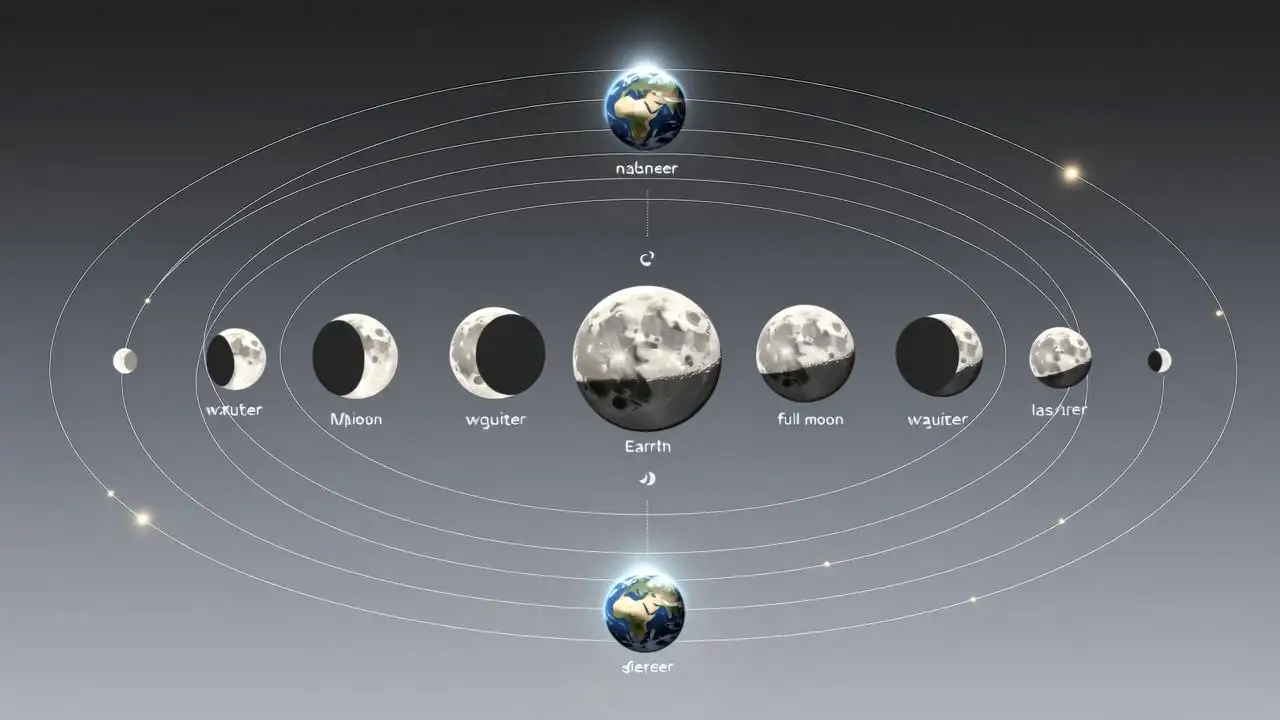
Understanding the broader context of each full moon requires examining the entire **full moon phases 2025** cycle. Each month follows a predictable sequence: new moon → waxing crescent → first quarter → waxing gibbous → full moon → waning gibbous → last quarter → waning crescent → new moon.
| Month | New Moon | First Quarter | Full Moon | Last Quarter |
|---|---|---|---|---|
| Jan | Jan 1 | Jan 7 | Jan 13 | Jan 20 |
| Feb | Jan 30 | Feb 5 | Feb 12 | Feb 19 |
| Mar | Mar 1 | Mar 7 | Mar 14 | Mar 21 |
| Apr | Mar 30 | Apr 5 | Apr 12 | Apr 19 |
| May | Apr 28 | May 4 | May 12 | May 18 |
| Jun | May 28 | Jun 2 | Jun 13 | Jun 17 |
| Jul | Jun 26 | Jul 1 | Jul 13 | Jul 16 |
| Aug | Jul 25 | Jul 31 | Aug 12 | Aug 14 |
| Sep | Aug 23 | Aug 29 | Sep 11 | Sep 13 |
| Oct | Sep 22 | Sep 27 | Oct 11 | Oct 13 |
| Nov | Oct 21 | Oct 27 | Nov 10 | Nov 11 |
| Dec | Nov 20 | Nov 26 | Dec 9 | Dec 11 |
Scientifically, these transitions occur due to the changing angles between the Earth, Moon, and Sun. As the Moon orbits Earth counterclockwise, different portions of its sunlit hemisphere become visible from our perspective. During the full moon phase, the Moon appears fully illuminated because Earth lies nearly between the Sun and Moon.
Visual learners may benefit from lunar phase diagrams available through NASA’s Solar System Exploration website, which illustrate these changes dynamically.
While every full moon holds significance, certain ones in 2025 stand out due to rare alignments or enhanced visibility. According to calculations from the Royal Observatory Greenwich, there will be **no Blue Moon** (a second full moon within a single calendar month) in 2025. However, multiple **supermoons** are expected.
A supermoon occurs when a full moon coincides with perigee—the Moon’s closest approach to Earth in its elliptical orbit—making it appear up to 14% larger and 30% brighter than a micromoon (at apogee). In 2025, the following full moons qualify as supermoons:
Additionally, a **partial lunar eclipse** is predicted to occur during the March 14, 2025, full moon (Worm Moon), visible primarily over Asia, Australia, and parts of Europe. Unlike total eclipses, where the Moon turns deep red, partial eclipses involve only a segment of the Moon entering Earth’s umbra.
Astrologically, many associate full moons with emotional intensity and culmination. Culturally, festivals such as Mid-Autumn Festival (though typically linked to September’s full moon in East Asian traditions) and various pagan sabbats align with specific lunar phases. While these interpretations vary, they underscore humanity’s enduring connection to the Moon.
This blend of science and symbolism reinforces why the **full moon calendar** remains relevant across disciplines.
The **list of full moons 2025** and associated **full moon phases 2025** offer practical benefits beyond stargazing. Gardeners often follow the lunar calendar, planting above-ground crops during the waxing moon and root vegetables during the waning phase—a practice known as "moon gardening." Spiritual practitioners may time meditations or rituals to coincide with full moons for symbolic renewal.
For photographers, capturing a supermoon rising near landmarks requires precise timing. Use apps like PhotoPills or The Photographer’s Ephemeris to plan shots with optimal lighting and positioning.
To maximize utility, consider downloading a printable version of the **full moon calendar 2025** from reputable sites like timeanddate.com or the Old Farmer’s Almanac. Bookmarking this page also ensures quick access to verified dates and updates.
By integrating lunar knowledge into daily life, individuals gain a deeper appreciation for Earth’s celestial companion—and a more intentional way to navigate the year ahead.
【Disclaimer】The information regarding full moon and related topics provided in this article is intended for general informational purposes only. It does not constitute professional advice in astronomy, agriculture, spirituality, or any other field. Readers are encouraged to verify critical details through authoritative scientific sources and consult qualified experts before making decisions based on this content. The author and publisher disclaim any liability for actions taken or omitted as a result of reading this article.
Ethan Caldwell
|
2025.11.25


