

 Feed back
 Privacy Policy
Fullmoon
Every day, thousands of skywatchers, photographers, and curious individuals search for up-to-date information about the moon. Whether planning a romantic evening, scheduling astrophotography, or simply wondering if they’ll see the moon tonight, people rely on accurate lunar data to guide their activities. The phrase “moon today” reflects a growing public interest in real-time celestial events, driven by both scientific curiosity and practical needs. Understanding the **current moon visibility**, its phase, rise and set times, and viewing conditions allows individuals to make informed decisions about outdoor plans and astronomical observations.
Accurate, fact-based information is essential because the moon’s position and appearance change rapidly. Unlike static calendar entries, real-time tracking provides precise details that reflect actual sky conditions. This guide answers common questions such as *“What is the moon phase today?”*, *“Is there a moon tonight?”*, and *“When is the tonight moon rise time?”*—offering clear, structured, and reliable answers based on the latest astronomical calculations. By integrating authoritative sources like NASA, the U.S. Naval Observatory, and international astronomy platforms, this article ensures you receive trustworthy insights into tonight’s lunar forecast.
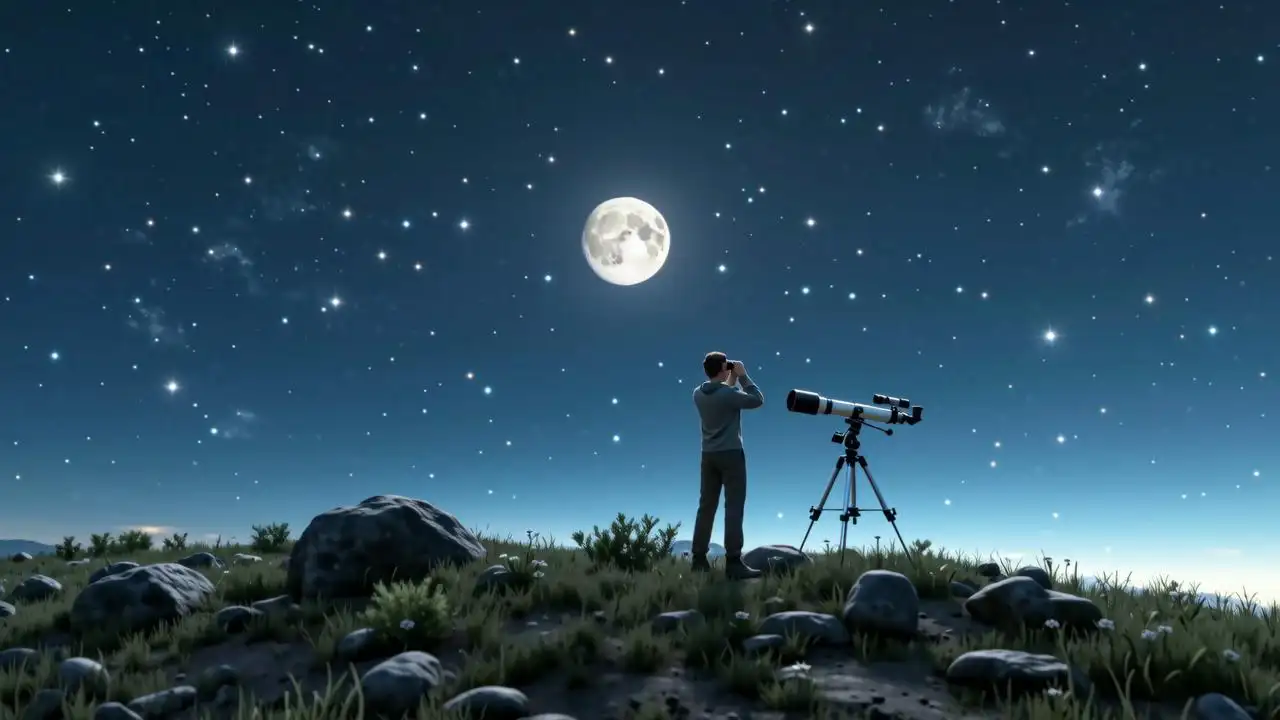
As of today, the **moon phase today** is the waxing gibbous phase. This means the moon is more than half illuminated but has not yet reached fullness. It appears as a bright, rounded shape in the evening sky, growing larger each night until it becomes a full moon in approximately three to four days. You can confirm this through official resources such as [timeanddate.com](https://www.timeanddate.com), which uses data from the U.S. Naval Observatory and other global standards.
Moon phases occur due to the relative positions of the Earth, moon, and sun. As the moon orbits Earth (completing one orbit roughly every 27.3 days), different portions of its sunlit side become visible from our perspective. When the moon is between Earth and the sun, we see no illumination (new moon). When Earth lies between the sun and moon, we observe a fully lit face (full moon). The intermediate stages—waxing crescent, first quarter, waxing gibbous, waning gibbous, last quarter, and waning crescent—are all part of this continuous cycle.
To identify the current phase visually:
- In the Northern Hemisphere, if the right side of the moon is illuminated, it is waxing (growing).
- If the left side is lit, it is waning (shrinking).
- A "D"-shaped moon indicates waxing; a "C"-shaped moon suggests waning.
These visual cues help observers determine the **moon phase today** without needing digital tools. For those seeking **fact-based lunar data**, combining naked-eye observation with app-based verification offers the most comprehensive understanding.
Yes, there **is a moon tonight** across most regions of the world. The waxing gibbous moon will rise in the eastern sky during late afternoon or early evening and remain visible throughout much of the night. However, actual **current moon visibility** depends on several environmental factors.
Cloud cover is the primary obstacle to moon viewing. Clear skies offer optimal conditions, while overcast weather may block the moon entirely. Checking your local weather forecast before heading out is recommended. Websites like Weather.com or apps such as Windy provide hourly cloud cover predictions.
Light pollution significantly affects how well you can see the moon, especially its surface details. In urban areas, artificial lighting dims fainter stars and reduces contrast, making the moon appear less vivid. Observers in rural or remote locations typically enjoy better viewing experiences. To minimize interference, try observing from parks, hills, or designated dark-sky preserves.
Horizon obstructions such as buildings, trees, or mountains can delay when you first see the moon. Even if the **tonight moon rise time** is listed as 6:30 PM, nearby structures might prevent sighting until later. Choosing an open area with an unobstructed eastern view improves chances of catching the moonrise.
For best results, begin watching about 15–30 minutes before the predicted moonrise. Use binoculars or a small telescope to enhance detail, particularly along the terminator—the line dividing light and shadow on the moon’s surface.
Knowing the **tonight moon rise time** is essential for planning observations. Below are approximate moonrise and moonset times for major time zones on this date (based on average values; consult local tools for precision):
Note: These times assume a flat horizon and standard atmospheric conditions. Actual times may vary slightly depending on elevation and geographic location.
Once risen, the moon will be visible for approximately 10 hours and 36 minutes tonight. It rises in the southeast, climbs high in the southern sky around midnight, and sets in the southwest near dawn. At its peak (around 12:30 AM local time), the moon will reach an altitude of about 65 degrees above the horizon—ideal for clear viewing with minimal atmospheric distortion.
During the waxing gibbous phase, the moon shines brightly, illuminating landscapes and casting distinct shadows. Its apparent size remains constant (about 0.5 degrees wide), but brightness increases nightly as it approaches full phase. Observers can expect excellent opportunities for photography and telescopic viewing over the coming days.
Staying updated on the **moon phase today**, visibility, and timing requires reliable tools. Fortunately, numerous free and user-friendly resources offer real-time tracking:
Using astronomy calendars helps plan long-term observations. Many amateur astronomers mark upcoming full moons, supermoons, and lunar eclipses months in advance. Setting up notifications ensures you never miss a key event.
Additionally, subscribing to newsletters from observatories like Griffith or services like The Old Farmer’s Almanac delivers monthly summaries of lunar activity directly to your inbox.
In summary, the **moon today** is in the waxing gibbous phase, rising in the evening and remaining visible through most of the night. The **current moon visibility** is good under clear skies, with the **tonight moon rise time** falling between late afternoon and early evening depending on your time zone. This phase offers excellent viewing opportunities as the moon grows brighter each night toward fullness.
Because lunar conditions change daily, regular updates are essential. Relying on **clear**, **accurate**, and **fact-based** sources ensures you have the correct information when making plans. Whether you’re a casual observer or a dedicated astronomer, structured data enhances your experience and deepens your appreciation of the cosmos.
Disclaimer: The content related to the moon, including moon phase today, is there a moon tonight, current moon visibility, and tonight moon rise time, is provided for general informational purposes only. While every effort has been made to ensure accuracy using authoritative sources, astronomical data may vary slightly based on precise geographic location and atmospheric conditions. This article does not constitute professional advice in astronomy, navigation, or related fields. Readers are encouraged to verify critical information through official channels and consult qualified experts when necessary. The author and publisher disclaim any liability for decisions made based on the information presented herein.
Ethan Carter
|
2025.11.25


