

 Feed back
 Privacy Policy
Fullmoon
A full moon is a captivating celestial event that has fascinated humanity for millennia. In astronomical terms, a full moon occurs when the Moon is positioned directly opposite the Sun in the sky, with Earth located between them. During this alignment, the entire sunlit face of the Moon becomes visible from Earth, making it appear fully illuminated. This phase marks the midpoint of the lunar cycle and typically lasts just a moment—though the Moon may appear full to the naked eye for up to three days around its peak.
The significance of the full moon extends beyond astronomy. Culturally, many societies have assigned names and meanings to each month’s full moon based on seasonal activities or natural phenomena. For example, Native American tribes used lunar cycles to track the seasons, giving names like the “Wolf Moon” in January or the “Harvest Moon” in September. Scientifically, full moons influence ocean tides due to increased gravitational pull and are often linked to studies in chronobiology—the effect of celestial cycles on living organisms.
This guide will help you understand key aspects of the lunar cycle, including *when does full moon occur*, how frequently it appears, and how to stay updated with the **full moon schedule this month** and beyond. Whether you're planning photography, gardening by the moon, or simply enjoying a night under bright moonlight, understanding lunar timing enhances your experience.

In astronomy, a full moon is defined as the lunar phase when the Moon's entire disk is illuminated as viewed from Earth. This happens approximately every 29.5 days during a synodic month—the time it takes for the Moon to return to the same position relative to the Sun as seen from Earth. The phenomenon occurs because the Moon reflects sunlight, and during a full moon, the side facing Earth is completely lit.
Full moons hold both cultural and scientific importance. Historically, many agricultural, religious, and spiritual practices were timed around lunar phases. The Hindu festival of Holi, Buddhist observances of Vesak, and Islamic calculations for Ramadan all rely on lunar calendars. Even today, some gardeners follow "lunar planting" schedules, believing crops grow better when planted during specific moon phases.
Scientifically, full moons affect tidal patterns. Because both the Sun and Moon exert gravitational forces on Earth’s oceans, their alignment during a full (and new) moon creates spring tides—higher high tides and lower low tides. According to NASA, these effects can raise sea levels by several inches more than normal neap tides.
This guide covers essential topics such as *when does full moon occur*, *how often is a full moon*, and provides current information on the **full moon schedule this month**, helping readers anticipate and appreciate these predictable yet awe-inspiring events.
To understand *when does full moon occur*, we must first explore the lunar cycle. The Moon orbits Earth roughly every 27.3 days (sidereal month), but due to Earth’s movement around the Sun, it takes about 29.5 days (synodic month) for the Moon to complete a full cycle of phases—from new moon to full moon and back again. Therefore, a full moon typically occurs once per cycle, around day 14 or 15 after the new moon.
During a full moon, the Sun, Earth, and Moon form a nearly straight line, with Earth in the middle—a configuration known as syzygy. This geometric alignment allows sunlight to fully illuminate the Moon’s near side, creating the bright, round appearance we recognize.
The exact *time of full moon tonight* or any given night is calculated using Coordinated Universal Time (UTC) and then converted into local time zones. For instance, if a full moon peaks at 03:17 UTC, it would be observed at 10:17 PM EST the previous evening or 12:17 AM MST the same calendar day, depending on location. These precise moments are determined by organizations like the U.S. Naval Observatory and NASA’s Jet Propulsion Laboratory.
While the instant of full illumination is brief, the Moon appears visually full for about two to three nights, which is why many people report seeing a full moon over multiple evenings. Websites such as timeanddate.com provide real-time updates on lunar phases, allowing users to check the exact *time of full moon tonight* in their region.
So, *how often is a full moon*? On average, there is one full moon per calendar month, occurring roughly every 29.5 days. Since most months are 30 or 31 days long, this fits neatly into our Gregorian calendar. As a result, most years feature 12 full moons—one per month.
However, because 12 lunar cycles total about 354 days (shorter than the 365-day solar year), an extra full moon occasionally appears approximately every 2–3 years. This additional full moon is commonly referred to as a **Blue Moon**. Contrary to popular belief, a Blue Moon doesn’t refer to the Moon’s color; rather, it denotes the second full moon within a single calendar month or the third of four full moons in a season (under the older seasonal definition).
For example, in 2023, there were 13 full moons, with the Blue Moon occurring on August 31. The next calendar Blue Moon will occur on May 31, 2026. Despite the phrase “once in a blue moon,” these events are not extremely rare—happening about seven times every 19 years.
Long-term patterns in lunar recurrence are governed by the **Metonic cycle**, a period of 19 years after which the phases of the Moon repeat on the same dates. This cycle was used historically in lunisolar calendars, such as the Hebrew and Babylonian systems, to synchronize lunar months with the solar year.
Understanding *how often is a full moon* helps in predicting future occurrences and recognizing cyclical patterns in nature.
If you're wondering about the **full moon schedule this month**, here is the latest data for October 2024:
This full moon is traditionally known as the **Hunter’s Moon**, a name originating from early Native American and colonial traditions. It signified the optimal time for hunting game, which had grown fat during the autumn harvest season. The Hunter’s Moon often appears larger and more golden due to its low angle in the sky, though this is an optical illusion known as the Moon Illusion.
Visibility forecasts indicate favorable viewing conditions across North America and Europe, assuming clear skies. Best viewing times are typically just after moonrise, when the Moon clears the horizon. Urban dwellers may benefit from heading to parks or rural areas to reduce light pollution.
Tips for optimal viewing:
You can also verify the *time of full moon tonight* via smartphone astronomy apps like SkySafari or Stellarium, which offer real-time sky tracking.
Staying informed about upcoming lunar events is easier than ever thanks to digital tools. To find out *when does full moon occur* in the coming months, consider using online moon phase calendars such as those provided by timeanddate.com, the Old Farmer’s Almanac, or NASA’s official website.
Astronomy apps like Star Walk 2, SkyView, or Google Sky Map allow users to point their devices at the sky and instantly identify the current lunar phase, along with dates for the next full moon. Many include push notifications for significant events like supermoons or eclipses.
For those who prefer physical references, printable annual full moon calendars are available from educational institutions and science outreach programs. These are especially useful for educators, photographers, and outdoor enthusiasts who plan activities around lunar cycles.
Notable upcoming lunar events include:
Tracking these events helps deepen appreciation for the rhythms of our solar system.
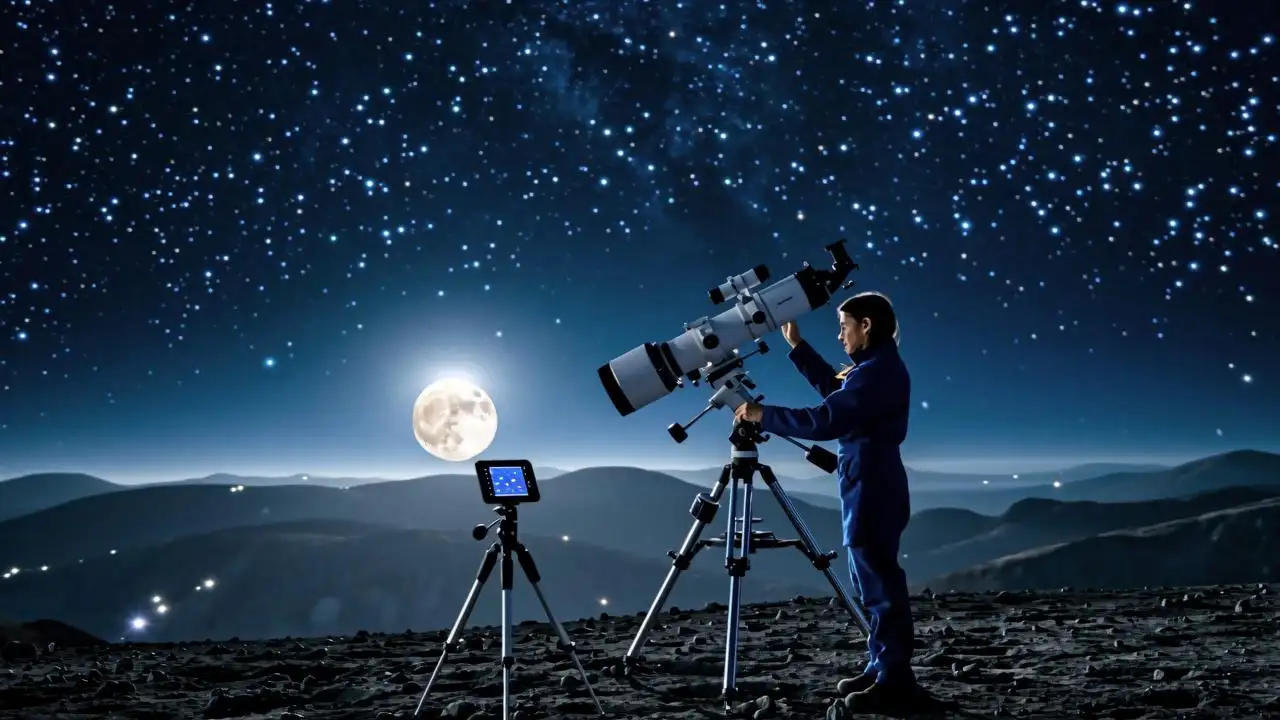
In summary, understanding the **full moon**—including *how often is a full moon* and *when does full moon occur*—offers both practical and enriching benefits. With a predictable cycle of approximately 29.5 days, full moons appear roughly once per month, though occasional Blue Moons add variety every few years. Resources like the **full moon schedule this month** make it easy to plan observations, photography, or cultural celebrations.
By leveraging accurate tools and scientific knowledge, anyone can track lunar phases with confidence. We encourage you to step outside during the next full moon, armed with greater understanding, and witness this timeless celestial spectacle.
For further learning, explore NASA’s Moon Trek platform, download the free “Eyes on the Solar System” app, or join a local astronomy club. The universe is always waiting to be explored.
Disclaimer: The information regarding full moon, lunar timing, and related topics in this article is provided for general informational purposes only. While every effort has been made to ensure accuracy, the content should not be considered professional advice in astronomy, navigation, or health-related fields. Readers are encouraged to consult authoritative sources such as NASA, the U.S. Naval Observatory, or certified experts before making decisions based on this material. The author and publisher disclaim any liability arising from the use or interpretation of this information.
Ethan Carter
|
2025.11.25


