

 Feed back
 Privacy Policy
Fullmoon
The Moon has captivated human imagination since the dawn of civilization. As Earth’s only natural satellite, the moon plays a critical role in stabilizing our planet's axial tilt, influencing ocean tides, and serving as a cornerstone for timekeeping in many ancient cultures. Its luminous presence in the night sky raises enduring questions: What is it made of? How did it come to be? And most commonly asked—why moon glows at night when it doesn’t produce its own light? These inquiries are not limited to casual stargazers; scientists have long studied moon facts to understand planetary formation, orbital mechanics, and the potential for future space exploration. This guide aims to provide clear, fact-based answers rooted in current scientific understanding, addressing fundamental aspects such as how the moon formed, its orbit around Earth, and the reason behind its nighttime glow.
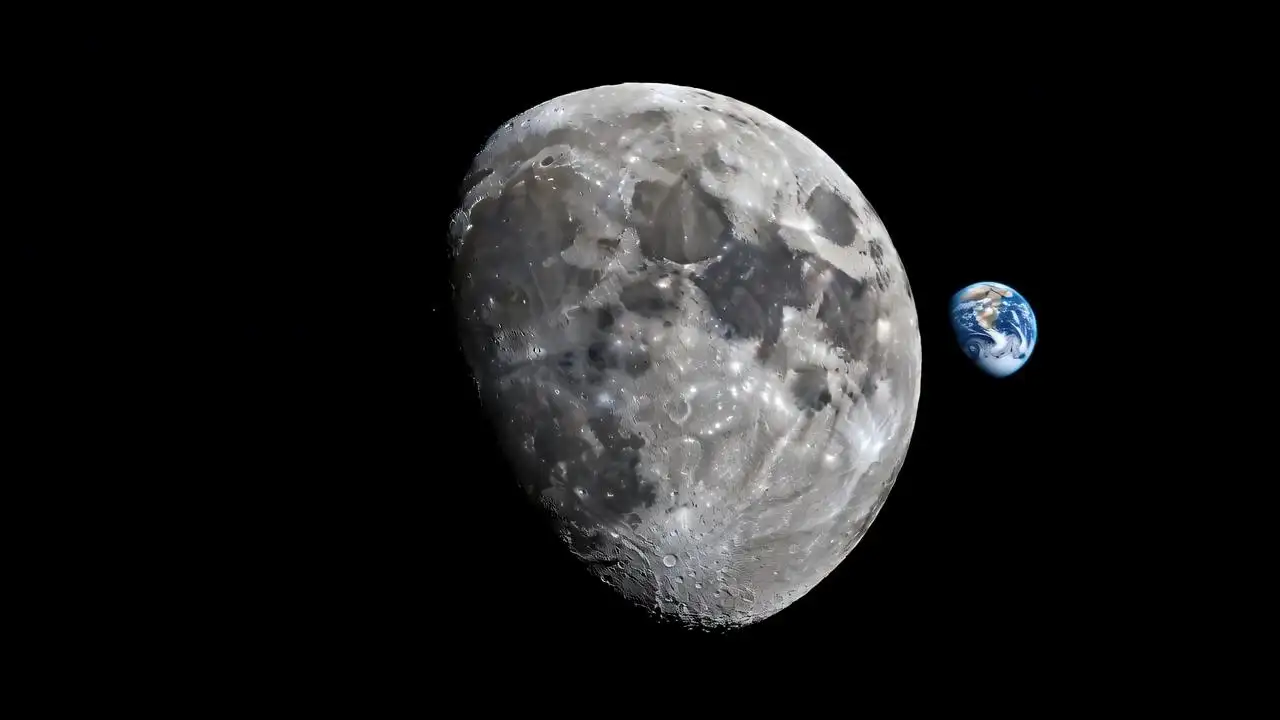
Understanding moon facts begins with examining the physical and orbital properties of the moon. With a mean radius of approximately 1,737 kilometers—about 27% of Earth’s diameter—the Moon is unusually large relative to its host planet, making it the fifth-largest natural satellite in the solar system. It orbits Earth at an average distance of 384,400 kilometers, though this varies slightly due to its elliptical path. The surface of the Moon is marked by three primary features: impact craters from meteorite collisions, dark basaltic plains known as *maria* (Latin for "seas"), and bright, rugged highland regions composed largely of anorthosite rock.
Unlike Earth, the Moon lacks a substantial atmosphere. This absence means there is no weathering or erosion from wind or water, preserving surface features for billions of years. Consequently, footprints left by Apollo astronauts remain undisturbed. Without atmospheric insulation, temperature extremes are severe: daytime temperatures near the equator can reach 127°C (260°F), while nighttime lows plunge to -173°C (-280°F).
One of the most intriguing moon facts is synchronous rotation—also called tidal locking—which causes the same hemisphere of the Moon to always face Earth. This occurs because the Moon’s rotational period (about 27.3 days) matches its orbital period around Earth. As a result, we refer to the side visible from Earth as the “near side,” while the opposite hemisphere is often called the “far side” (not to be confused with the mythical “dark side,” which receives equal sunlight). NASA’s Lunar Reconnaissance Orbiter has mapped both sides in detail, revealing greater crater density on the far side, likely due to its thicker crust shielding it from early lava flows.
This leads directly into discussions about moon orbit around Earth, which governs much of the Moon’s observable behavior.
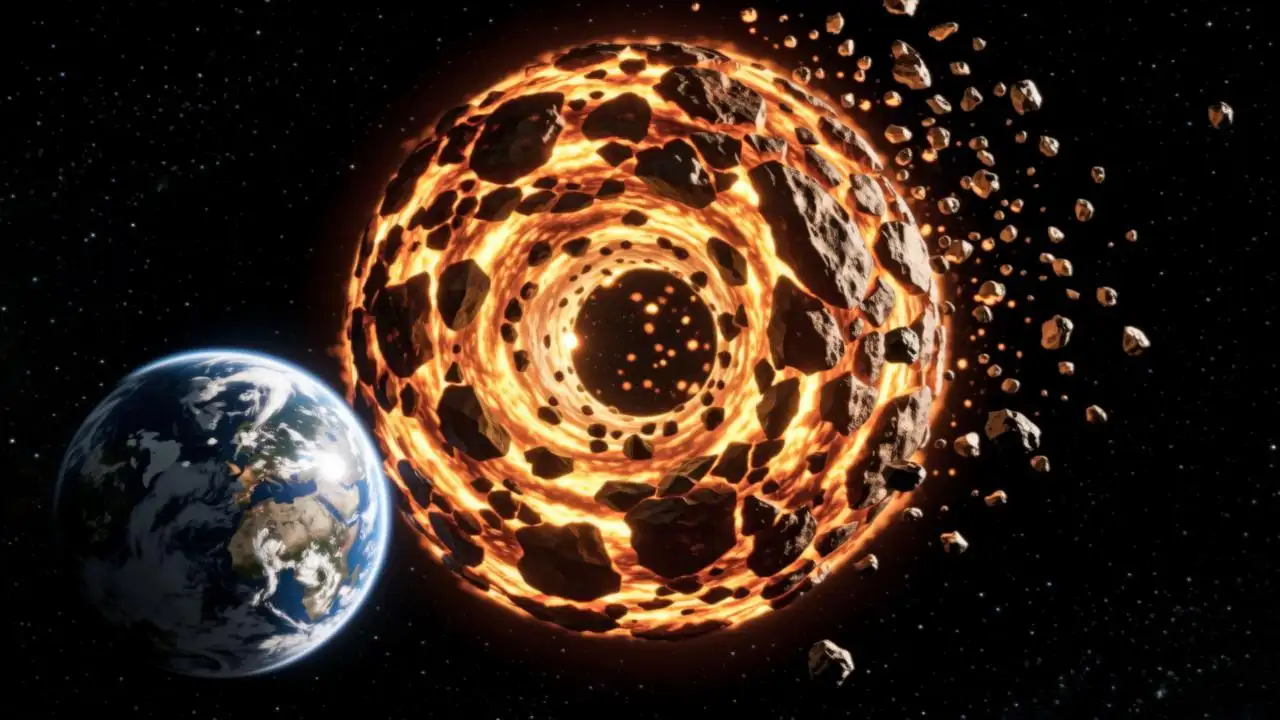
Among all moon facts, perhaps the most profound question is how the moon was formed. The leading scientific explanation is the Giant Impact Hypothesis, first proposed in the 1970s and refined through decades of research. According to this theory, roughly 4.5 billion years ago—shortly after the formation of the solar system—a Mars-sized protoplanet named *Theia* collided with the early Earth. The impact ejected vast amounts of debris into orbit, primarily from Earth’s mantle and Theia’s fragmented remains. Over time, this material coalesced under gravity to form the Moon.
Several lines of evidence support this model. First, analysis of lunar samples brought back by the Apollo missions shows that the Moon’s isotopic composition—particularly oxygen isotopes—is nearly identical to Earth’s, suggesting a shared origin. Second, the Moon has a relatively small iron core compared to Earth, consistent with the idea that mostly mantle material was involved in its formation. Third, computer simulations demonstrate that such a collision could produce a debris disk capable of forming a body the size of the Moon.
Following its formation, the young Moon was likely covered in a global magma ocean. As it cooled over millions of years, heavier minerals sank while lighter ones rose, creating the layered structure seen today. This early molten phase explains the abundance of anorthosite in the highlands, which crystallized early from the cooling magma.
These insights into how the moon was formed help contextualize its current state and inform ongoing exploration efforts.
The moon orbit around Earth follows an elliptical (slightly oval-shaped) path rather than a perfect circle, with an average separation of 384,400 km. At perigee (closest approach), the Moon is about 363,300 km away; at apogee (farthest point), it reaches 405,500 km. This variation contributes to phenomena like "supermoons," when a full moon coincides with perigee, appearing up to 14% larger and 30% brighter than usual.
As previously noted, the Moon exhibits synchronous rotation, meaning its orbital period (27.3 days) equals its rotational period. This synchronization ensures that only one side faces Earth consistently. However, due to slight wobbles in its motion—known as libration—we actually observe about 59% of the lunar surface over time.
The Moon’s orbit also determines its phases, which result from changing angles between the Sun, Earth, and Moon. A complete lunar phase cycle—the synodic month—lasts about 29.5 days, slightly longer than its orbital period due to Earth’s movement around the Sun. These phases range from new moon (invisible) to full moon (fully illuminated), with intermediate stages including waxing crescent, first quarter, waxing gibbous, waning gibbous, last quarter, and waning crescent.
Beyond lighting patterns, the moon orbit around Earth drives tidal forces. The Moon’s gravitational pull creates bulges in Earth’s oceans, resulting in two high tides and two low tides each day. When the Sun and Moon align (during new and full moons), their combined gravity produces higher-than-normal spring tides. Conversely, during quarter phases, the Sun and Moon pull at right angles, causing weaker neap tides.
Additionally, the alignment of the Moon’s orbit with Earth and Sun enables solar and lunar eclipses—spectacular events that underscore the precision of celestial mechanics.
A common misconception is that the Moon generates its own light. In reality, the phenomenon of why moon glows at night lies in reflection. The Moon does not emit light; instead, it reflects sunlight off its surface—a property measured by albedo. The lunar albedo averages about 0.12, meaning it reflects roughly 12% of incoming sunlight, similar to worn asphalt. Despite this relatively low reflectivity, the Moon appears bright in the night sky because of the contrast against the dark background and the intensity of direct sunlight illuminating it.
The visibility of the Moon at night depends on its position relative to the Sun and Earth. During a full moon, the entire sunlit side faces Earth, making it highly visible throughout the night. In contrast, a new moon occurs when the Moon is between Earth and the Sun, so its dark side faces us and it becomes nearly invisible.
Brightness variations also occur due to factors like surface composition and viewing angle. For instance, the maria appear darker than the highlands because they consist of iron-rich basalt. Additionally, during a lunar eclipse, Earth passes directly between the Sun and Moon, casting a shadow that dims or reddens the Moon—a striking visual caused by Rayleigh scattering of sunlight through Earth’s atmosphere.
Understanding why moon glows at night demystifies one of the most familiar yet misunderstood aspects of lunar observation.
In summary, exploring key moon facts reveals a complex and dynamic world shaped by violent origins, precise orbital mechanics, and passive illumination. We now understand how the moon was formed through the Giant Impact Hypothesis, supported by isotopic data and geological modeling. Its moon orbit around Earth governs not only its visible phases but also critical natural processes like ocean tides and eclipses. And the answer to why moon glows at night lies in reflected sunlight, not intrinsic luminescence.
Scientific interest in the moon continues to grow. NASA’s Artemis program aims to return humans to the lunar surface by the mid-2020s, with plans to establish sustainable bases for long-term research. These missions will test technologies needed for Mars exploration and investigate lunar resources like water ice in permanently shadowed craters.
For readers, the best way to engage with these concepts is simple: look up. Observing the Moon with binoculars or a small telescope reveals craters, mountains, and maria in stunning detail. Tracking its phases over a month offers firsthand insight into orbital dynamics. By combining observation with scientific literacy, anyone can deepen their appreciation of Earth’s constant companion.
Disclaimer: The content related to the moon provided in this article is for informational purposes only and does not constitute professional advice in any scientific, astronomical, or educational field. Readers are encouraged to verify information through authoritative sources and consult qualified experts when making decisions based on the material presented. The author and publisher disclaim any liability for actions taken or omitted as a result of reading this article.
Ethan Caldwell
|
2025.11.25


